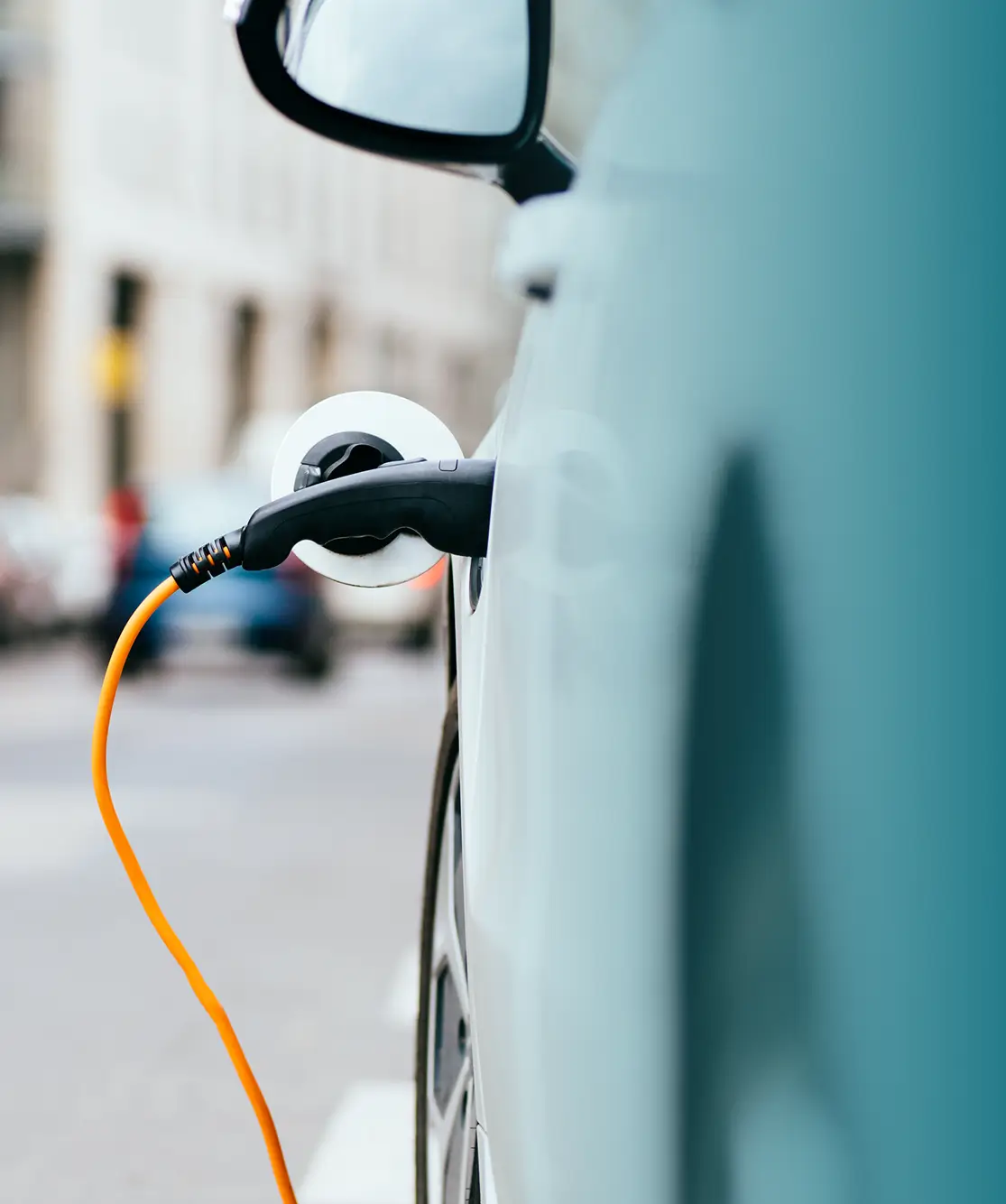
Understanding EV Charging: How Electric Vehicles Get Charged
EV charging means supplying electrical energy to an electric vehicle battery so the vehicle can operate. Electricity flows from the power grid through a charging system and gets stored inside the vehicle’s battery pack. That stored energy later powers the motor, electronics, and auxiliary systems during driving.
So, let’s say you drive daily in an Indian city like Kochi or Bengaluru. A typical commute covers around 30 to 40 kilometers and takes about 60 to 90 minutes including traffic. After reaching home in the evening, the vehicle stays parked for 10 to 12 hours. EV charging uses that parked time to refill energy instead of requiring a dedicated fuel stop. The vehicle charges quietly and automatically once connected.
Keep in mind that EV charging works as an energy transfer process, not as instant refueling. In fact, charging speed depends on charger type, battery capacity, and site power availability.
Now, let’s discuss in detail to understand how EV charging works.
Types of Electric Vehicles and How Charging Differs
EV charging often sounds technical, but the idea is simple once you see how different electric vehicle types rely on electricity in different ways. Not every electric vehicle charges the same way, and not every model depends equally on charging infrastructure. Some vehicles run fully on electricity, some combine electricity with fuel, and some avoid external charging altogether
It is important to understand these differences because they clarify how charging access affects each vehicle category differently, especially across Indian homes, apartments, workplaces, highways, and mixed-use developments.
Electric Vehicle Type | How the Vehicle Is Powered | How EV Charging Works | Typical Charging Source | Charging Dependency |
Battery Electric Vehicle (BEV) | Fully electric motor powered only by a battery | Battery charges directly from an external charger | Home chargers, workplace chargers, public AC and DC chargers | Complete dependence on charging infrastructure |
Plug-in Hybrid Electric Vehicle (PHEV) | Electric motor combined with petrol engine | Battery charges from external charger and engine | Home chargers and fuel stations | Partial dependence on charging infrastructure |
Hybrid Electric Vehicle (HEV) | Petrol engine with electric assist | Battery charges internally via braking and engine | No external charging required | No dependence on charging infrastructure |
Fuel Cell Electric Vehicle (FCEV) | Electric motor powered by hydrogen fuel cell | No battery charging, hydrogen refueling required | Hydrogen refueling stations | Dependence on hydrogen infrastructure |
How EV Charging Works Step by Step?
The step-by-step process of EV charging stays consistent across home chargers, workplace chargers, and public fast charging stations, with only charging speed and power level changing based on the setup:
Step 1: Parking at a Charging Location
An electric vehicle gets charged only when it is parked. Charging typically happens at home, in an apartment parking area, at an office, along highways, or at public charging stations. The vehicle stays stationary during the entire charging process.
Step 2: Connecting the Charger to the Vehicle
The charging cable is connected from the charger to the vehicle’s charging port. The connector type depends on the vehicle and charger category. Keep in mind that a secure physical connection allows power flow to begin safely.
Step 3: Charger and Vehicle Communicate
Once connected, the charger and vehicle exchange signals. The vehicle confirms compatibility, battery status, and how much power it can safely accept. Don’t forget that charging does not begin until this communication is complete.
Step 4: Power Conversion Begins
Electricity from the grid reaches the charger as alternating current.
- During AC charging, conversion to direct current happens inside the vehicle.
- During DC fast charging, conversion happens inside the charging station itself.
Direct current then flows into the battery.
Step 5: Battery Management Controls Charging
The battery management system regulates voltage, current, and temperature. Charging speed adjusts automatically to protect battery health and ensure safe operation, especially during high power sessions.
Step 6: Energy Stores Inside the Battery
Electric energy gets stored chemically inside the battery cells. This stored energy later powers the electric motor that moves the vehicle.
Step 7: Charging Speed Reduces Near Higher Levels
As the battery fills up, charging speed gradually slows down. This controlled reduction protects battery life and prevents overheating, especially beyond higher charge levels.
Step 8: Charging Stops Automatically
Charging ends when the battery reaches the set charge limit or full capacity. The system shuts off power flow without manual intervention.
Once the charging cable is disconnected and the port closes, the EV is ready to drive using stored electrical energy.
Levels of EV Charging and Where Each One Fits
Charging Level | Power Range | Typical Charging Time | Best-Fit Locations in India | Vehicle Use Pattern | Primary Purpose |
AC Level 1 (Slow) | 2.3–3.3 kW | 12–20 hours | Individual homes | Low daily driving | Emergency or backup charging |
AC Level 2 (Standard) | 3.7–7.4 kW | 6–10 hours | Homes, apartments, offices | Daily commuting | Overnight charging |
AC Level 2 (High Power) | 11–22 kW | 3–5 hours | Commercial buildings, parking lots | Extended parking | Faster turnaround |
DC Fast Charging | 25–60 kW | 45–90 minutes (to 80%) | City hubs, fleet depots | Frequent short stops | Quick energy top-ups |
DC Ultra-Fast Charging | 90–240+ kW | 20–40 minutes (to 80%) | Highways, logistics hubs | Long-distance travel | Rapid charging |
How Long It Takes to Charge an Electric Vehicle?
Charging time for an electric vehicle depends on charger power, battery size, and where charging happens in daily Indian conditions.
- A home parking setup with an AC charger rated between 3.3 kW and 7.4 kW typically adds enough charge for daily city travel within 6 to 10 hours, which fits overnight parking in independent houses and apartments.
- Workplace or apartment chargers with slightly higher AC capacity shorten the time to about 4 to 6 hours during office hours or daytime parking.
- Public DC fast chargers placed inside cities reduce charging time significantly and usually deliver useful driving range within 45 to 90 minutes during shopping or short stops.
- Highway DC fast chargers designed for long-distance travel restore most usable range within 20 to 40 minutes, which aligns with meal or rest breaks on intercity routes.
Notably, Indian traffic patterns, average daily distance of 30 to 50 kilometers, and long parked durations at home or work allow charging to happen naturally without daily dependence on fast chargers.
How Berryvolt Makes EV Charging Simple and Reliable?
Berryvolt makes EV charging simple and reliable by handling the entire journey from planning to long-term operation under one accountable framework.
Reach out to us for EV charging guidance and installation. We will help you through every step with clarity and care. Site assessment, charger selection, installation, and long-term support stay handled under one team so charging works smoothly from day one.
No matter if you need an EV charger for home, apartment, workplace, fleet, or public location. We’ll plan it around real power conditions and daily usage. Get in touch today to make EV charging simple, safe, and ready for everyday use in India. We’ll also guide you on how EV charging works in more detail.